Your Local Guitar Tech in Sutton, SW London
Don't buy another guitar. Get your current guitar set up properly and discover the killer axe hiding inside.

Don't buy another guitar. Get your current guitar set up properly and discover the killer axe hiding inside.
Email or text me to book an appointment. I am open from 1 PM to 7 PM in Sutton. Let me know what time suits you best.
Bring your guitar in. If I can't make a real difference, I won't waste your time. You'll get a maximum price and completion date upfront.
When ready, I'll send an invoice and we'll agree on a collection time. Pay easily by cash, PayPal, or bank transfer.
Prices are indicative - I can give you a more accurate price once I've seen the guitar. A setup on a brand new guitar will often cost less. Bring it in for a free, no-obligation assessment!
I recommend D'Addario strings but I'll fit whatever you want.
Overall clean and adjust the neck relief, bridge height and intonation.
As Basic plus fret level, crown and polish. The ultimate in playability.
Additional charge when fitted to the guitar.
Basic set-up not required but recommended. Plus strings at cost.
Plus cost of parts required.
Nut, tuners, pickups, bridge. Contact for a quote.
Plus parts. Come and discuss your dream build.
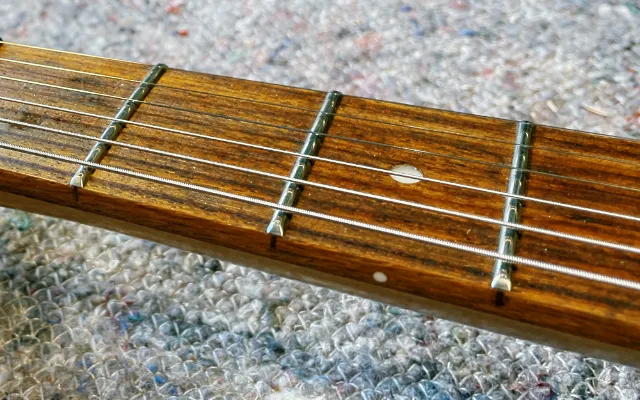
Before
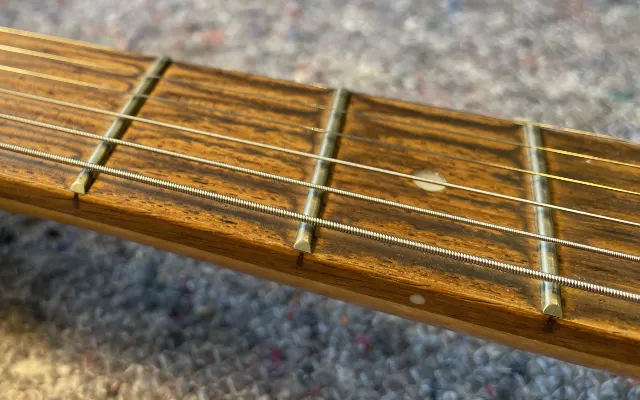
After
I've been tinkering with guitars since I was a teenager. In my 20's I ran my own custom guitar business, then worked for the UK's biggest guitar manufacturer — Watkins — before settling down to a life writing computer software.
At home though, I never stopped messing with guitars, buying, selling, customising and re-working them and building several Partscasters. Now retired, I've trimmed back the collection and gone back to my roots.
With a life-time of collecting tools and watching the industry, I can bring my experience as a guitar tech to help you get the most out of the guitars you already have.
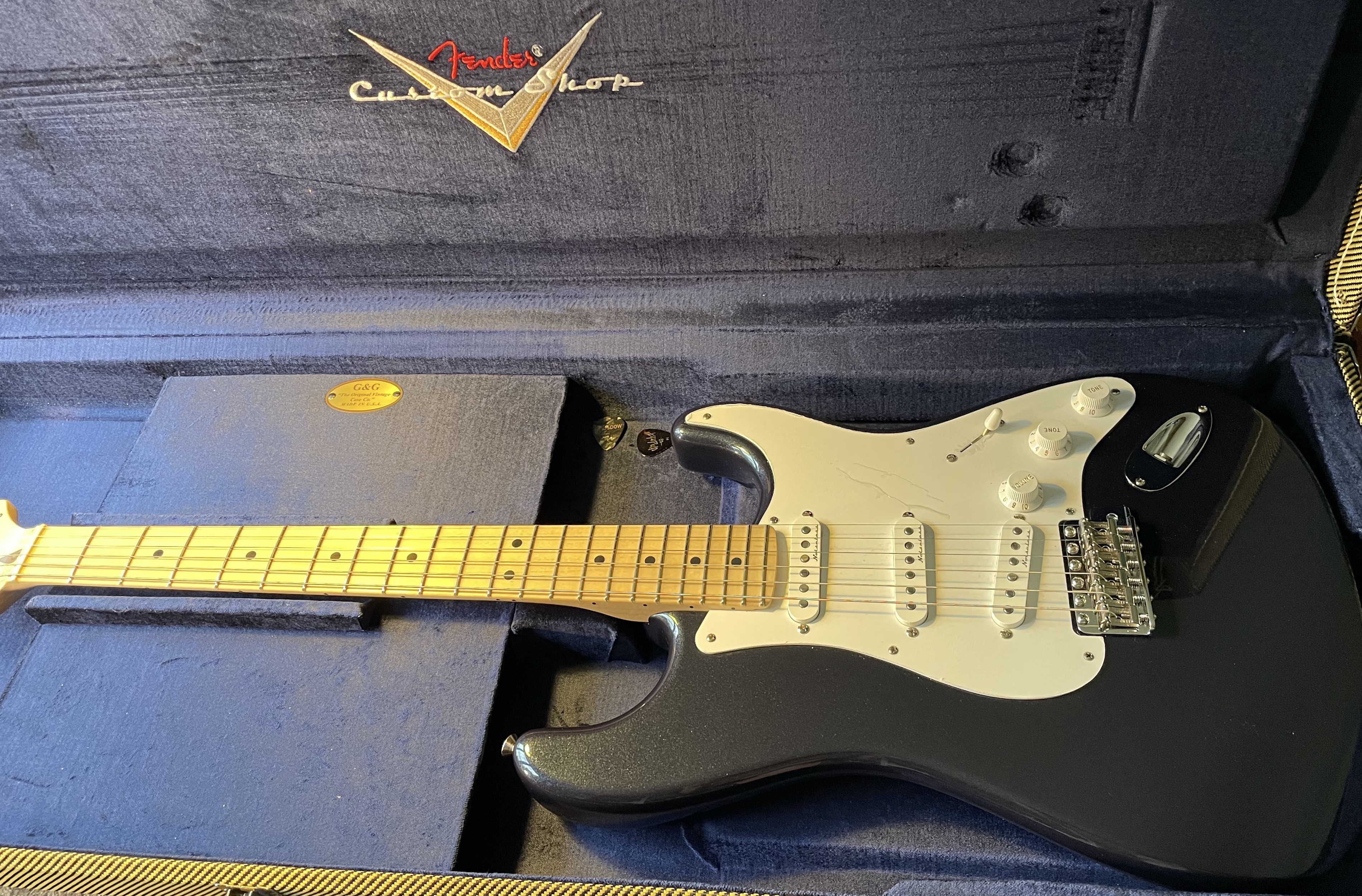
The best guitar is the one you just can't put down. Finding that guitar is easier than you think. Three things make a guitar great to play: a comfortable neck with level frets, a decent set of strings, and a proper setup.
Electric guitars (and most acoustics) include adjustable features that let you dial playability to suit your style. Key adjustments include:
New guitars often leave the factory with a conservative “safe” setup to avoid problems in the shop like fret buzz. That usually means higher action, extra neck relief and shallow nut slots. Older guitars may have been set for a different player or they have drifted out of adjustment with age and environmental changes. A proper setup tailors the guitar to you and restores optimal playability.
Factory strings are often the cheapest. Change them for a quality set immediately and then at least once a year, more often if you play frequently. Strings lose tone, corrode, and become more likely to break over time.
Fretwire is never perfect. It usually requires a level, re-crown, and polish after installation to get the best fret job. As it adds time and cost, few factory guitars get this treatment. The likely reason vintage guitars play so well is that a skilled tech has spent time leveling the frets. A basic setup improves playability a lot, but the “deluxe” route gives the ultimate result.
Summary: Modern manufacturing and fierce competition has raised baseline quality, so the difference between instruments these days often comes down to the setup. A great setup can make an inexpensive guitar play far beyond its price.